Another presidency, another “anti-epal” order, this time in the form of DILG Memorandum Circular no. 2026-006, released on Jan. 29 this year. The MC “[reiterates and institutionalizes] the policy prohibiting the display and/or affixture of the name, image, or likeness of public officials on government-funded projects, programs, activities, and properties, in order to promote professionalism in public service, and uphold the principle that government undertakings are funded by public resources and not by individual officials.”
The directive cites the legal bases for it, including this year’s General Appropriations Act, which “prohibits the display and/or affixture of the name, image and likeness of public officials on government projects and the display and/or affixture of the name, picture, image, motto, logo, color motif, initials, or other symbol or graphic representation associated with any public official,” specifically “on signboards for all programs, activities, and projects funded under said Act.”
Reportedly, President Ferdinand Marcos Jr.—Bongbong, BBM, PBBM himself—ordered the fast-tracking of the DILG MC (more than midway into his term).
The current administration’s orders echo DILG MC 2010-101—“Banning Names or Initials and/or Images or Pictures of Government Officials in Billboards and Signages of Government Programs, Projects and Properties”—issued nearly sixteen years ago by former DILG secretary Jesse Robredo. No statutes or earlier circulars are cited in that 2010 order; Robredo partly anchored his issuance on “[President Benigno “Noynoy” Aquino III’s directive to] all members of the Cabinet and other government instrumentalities to refrain from associating the President’s personality and identity in their programs and projects.”
Today’s anti-epal issuances do not contain such a clear injunction to disassociate public projects from the president—the DILG MC is only addressed to “all provincial, city, municipal, barangay elected and appointed officials; DILG Central Office, regional and field office personnel; and officials and employees of DILG attached agencies.” If the slew of “BBM” and “PBBM” programs and projects since Marcos Jr. became president are any indication, Bongbong may not have an affinity for such anti-self-aggrandizing orders that apply to him, or perhaps anyone in his cabinet that he may designate as his preferred successor.
“Build Better More” and More
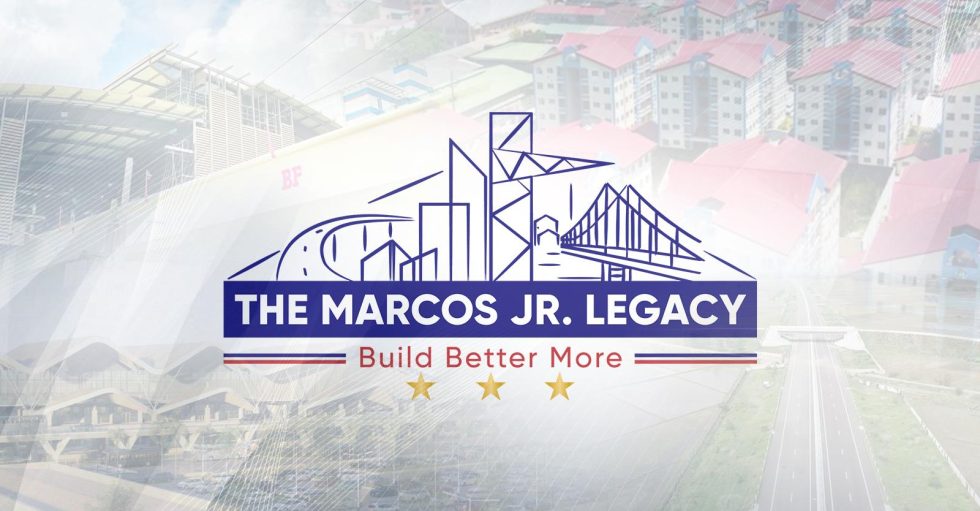
Perhaps the best known BBM program is Build Better More, the administration’s infrastructure program, which superseded the Duterte-era “Build! Build! Build!” (which reportedly did not result in a lot of actual building). Key agencies involved in the program include the Department of Public Works and Highways and the Department of Economy, Planning, and Development and one of its attached agencies, the Public-Private Partnership Center of the Philippines (PPPs being more crucial to BBM [the program] than Duterte’s BBB). A 2025 Bangko Sentral ng Pilipinas brochure notes that there are over 200 infrastructure flagship projects under the BBM program; how many will be completed—or at least initiated—before BBM’s term concludes remains to be seen. Former Senate Minority Floor Leader Koko Pimentel mocked the BBM moniker back when it was unveiled in 2022, stating that “BBM” could very well be replaced with “FM”—still the president’s initials—standing for “Finish More.”
Not to be outdone, also early on in Bongbong’s term, the Department of Tourism and the Department of Migrant Workers launched a program called Bisita Be My Guest (BBMG, but also abbreviated as BBM Guest). It was an incentive/rewards program largely for migrant workers and other overseas Filipinos to serve as tourism ambassadors. It is unclear if the program was effective; reportedly, there was a 2.16 percent drop in tourist arrivals in the country in 2025. As of this writing, the BBMG website is not live; side-by-side messages of support uploaded there from both Bongbong and Vice President Sara Duterte do call to mind the halcyon days of the BBM-Sara Uniteam. A large portrait (bigger than an ID-sized one) of tourism secretary Christina Garcia Frasco could be found on the old website; BBM Guest was launched a few years before Frasco ordered the removal of her visage from tourism materials across the country, having been called out for appearing in (at times dominating) not an insignificant amount of them.
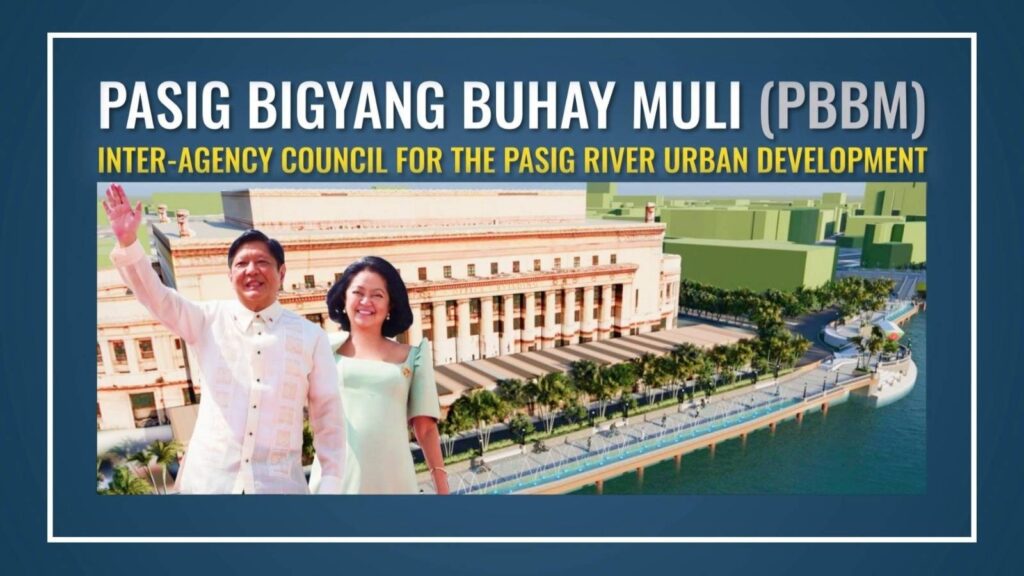
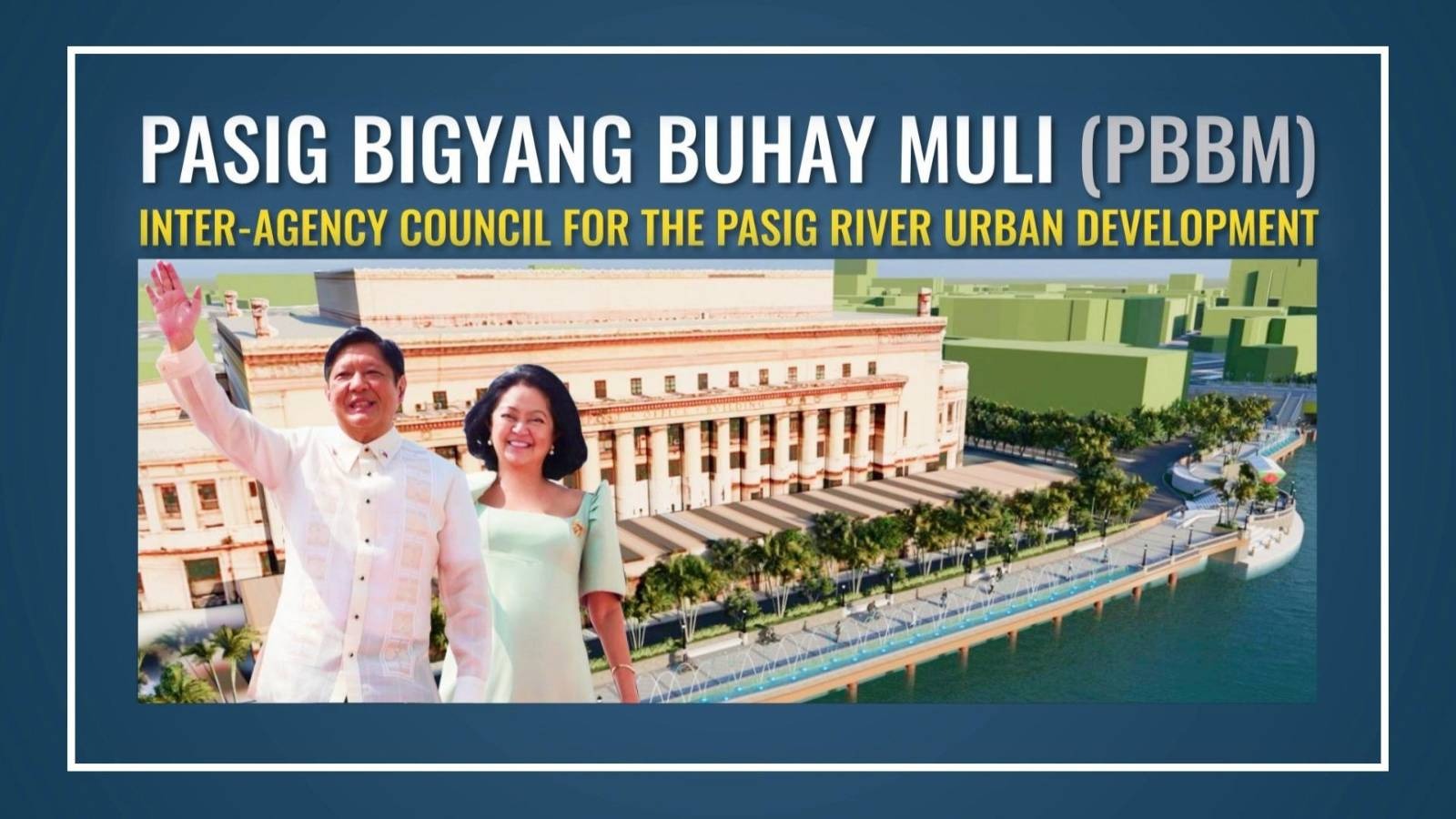
Among the “PBBM” endeavors, the most headline-making seems to be the Pasig Bigyang Buhay Muli project. According to the project’s website, this PBBM came about when “Our beloved leader, His Excellency President Ferdinand R. Marcos Jr., together with our First Lady Marie Louise Araneta-Marcos, promptly ordered the creation of a comprehensive and extensive rehabilitation program for the Pasig River.” At the project’s launch in 2024, the Mandaluyong-born Marcos declared himself “Anak ng Pasig” (child of the Pasig)—perhaps his way of justifying the name of the river rehabilitation project. (Interestingly, his website insists that he was born in Batac, Ilocos Norte.) Reportage on the first lady’s recent ceremonial turnover of kiosks at the Pasig River Esplanade—itself a product of the current rehab program—affirms that the PBBM label remains in use for the patently beloved Bongbong Marcos’s river revival efforts.
Exactly how many BBM/PBBM projects exist or existed? Besides the abovementioned, at the national level, there’s BroadBand ng Masa, the free public wi-fi program of the Department of Information and Communications Technology. In 2024, the Department of Social Welfare and Development launched the Buong Bansa Mapayapa program, the name they gave to their current “peace and development framework.”
The National Housing Authority’s housing program has also been referred to as the Build Better and More program, not to be (but certainly has been) confused with the broader BBM infrastructure marquee. The Food and Drug Administration has a program that “aims to assist and capacitate local entrepreneurs particularly the micro, small, and medium enterprises” called Bigyang-halaga, Bangon MSMEs (which is usually rendered BBMSMEs, but sometimes rendered as BBM MSMEs—what the extra “M” stands for is a mystery).
From 2022 until around August 2025, the Department of Budget and Management has been pushing for the passage of the Progressive Budgeting for Better and Modernized Governance bill. Nowadays, DBM is advocating the enactment of a Philippine Budgeting Code, “formerly known” as the PBBM Governance proposal. Perhaps the renaming will finally lead to the bill’s enactment. The short title of the most recent Senate proposal, filed by Senator Jinggoy Estrada, is “the Philippine Budgeting Act.”
Running count thus far: seven national-level programs (one international, in a sense), and one executive-backed legislative proposal that has since been renamed. But wait, there’s more.
Bigas, Bridges, Medical Aid
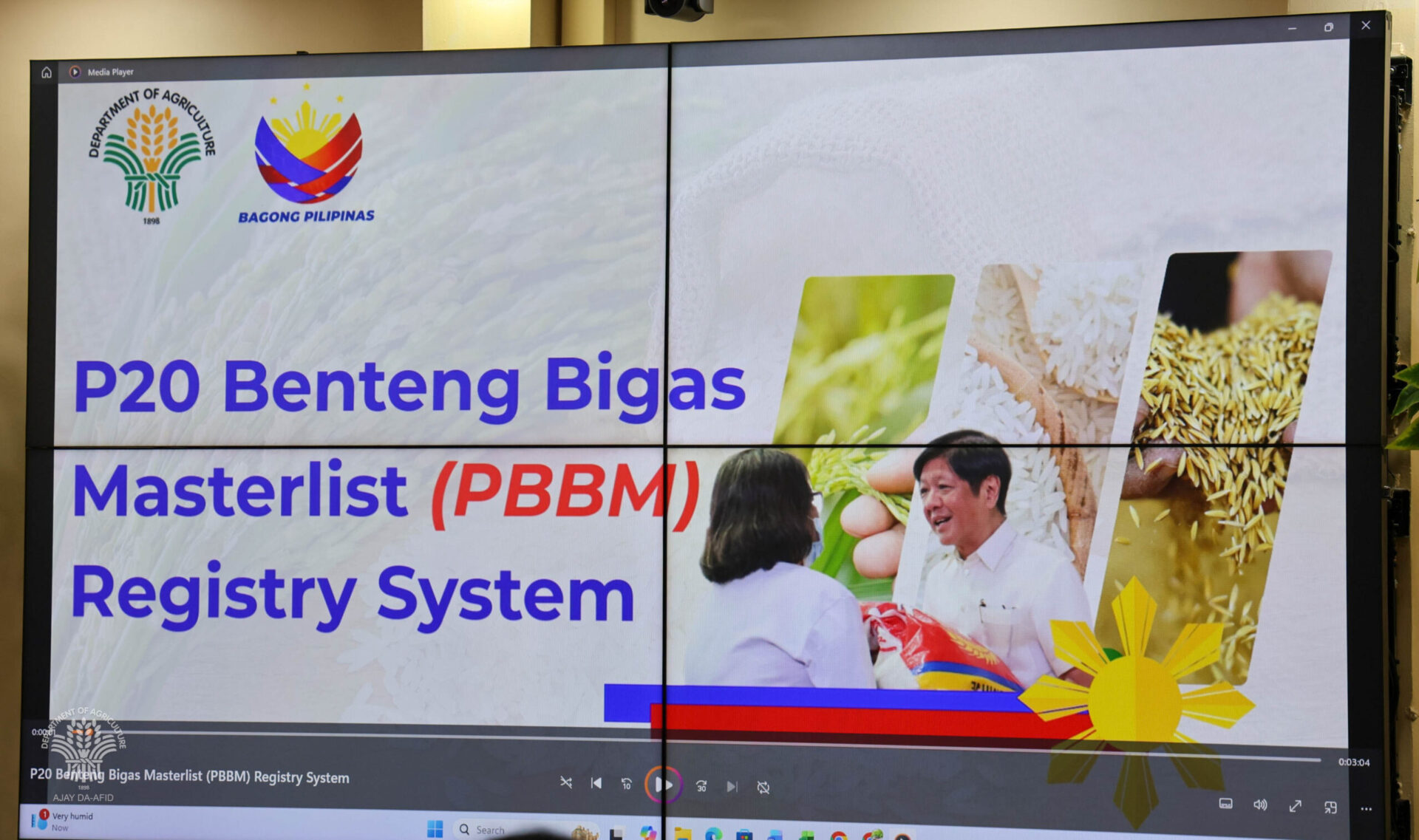
Still at the national level, the Department of Agriculture refers to the (very partial) fulfillment of the president’s campaign promise to bring down the price of rice to PHP 20 per kilo as the “Benteng Bigas, Meron Na!” program. Then there’s the registry system to access the low-cost rice: P20 Benteng Bigas Masterlist (PBBM) Registry System. In English, the “PBB” section is “twenty-peso twenty-peso rice”—an instance of dumb redundancy for the sake of recall.

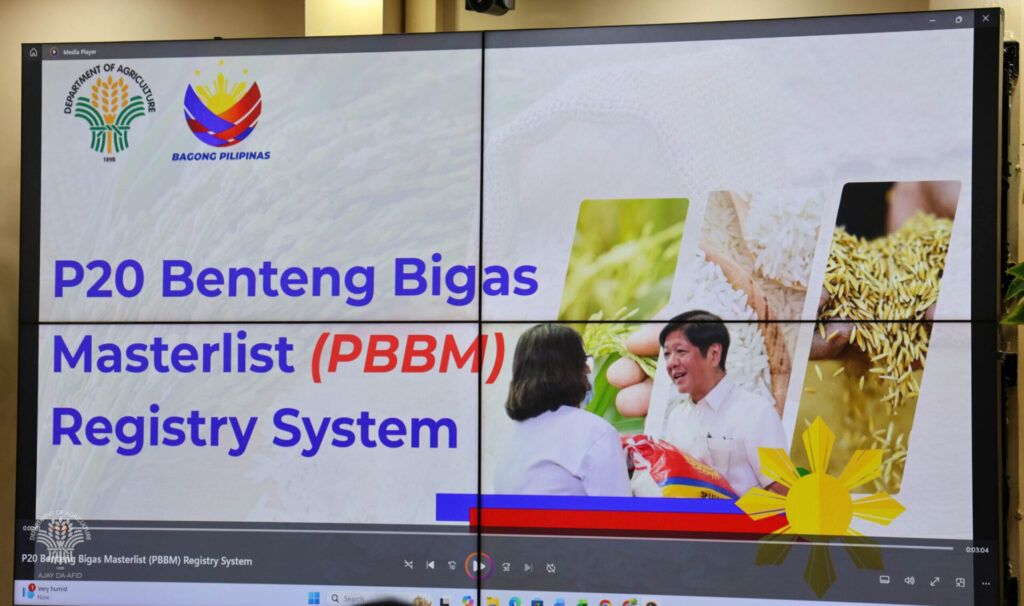
The DA’s BBM rice program is distinct from that of the National Irrigation Authority—the latter’s BBM stands for “Bagong Bayaning Magsasaka,” a farmer assistance program that draws from (or is simply a nickname of) NIA’s Farming Support Services program. (A support program for West Philippine Sea fisherfolk under the DA’s Bureau of Fisheries and Aquatic Resources has a similar-sounding name: Kadiwa ng Bagong Bayaning Mangingisda, or KBBM.) All of the preceding are distinct from an unrealized proposal called Programang Benteng Bigas sa Mamamayan, publicized in June 2022, from the Duterte-era leadership of the Department of the Agrarian Reform, which entailed the consolidation of small farms into “mega farms” to fulfill the low-cost rice promise.
All of the above are also different from the current name of DSWD’s AKAP Rice subsidy program—Bigas para sa Bayan na Mura. That’s four distinct agencies (NIA was “returned” to the Office of the President in 2024, after briefly being placed under the Department of Agriculture by President Duterte in April 2022) that want to brand bigas na mura as BBM.
A February 4 Manila Bulletin report noted that “regular milled rice averaged ₱40.65 per kilo, well-milled rice ₱46.30 per kilo, and premium rice ₱54.51 per kilo.”
While the Department of Agrarian Reform’s 2022 PBBM proposal was not implemented, there is an existing PBBM-branded major DAR initiative: the Pang-Agraryong Tulay Para sa Bagong Bayanihan ng mga Magsasaka Bridges (PBBM Bridges, if one disregards the “T” from “Tulay”) project. The project made headlines—local and overseas—in September last year when it was reported that the president of South Korea cancelled proceedings toward the approval of a loan for PBBM Bridges, given our globally renowned flood control mess; the original Korean news article helpfully pointed out to readers that the program was named after Marcos.
In response to the loan discontinuation news, in September last year, the Department of Finance made a face-saving claim that funding for the bridges was actually set to come from France, not Korea. Earlier this year, according to a BusinessMirror article, DEPDev’s Economy and Development Council “approved the P28.24-billion [PBBM Bridges] project,” which “involves the construction of better and well-designed durable, permanent modular steel bridges to link [agrarian reform communities] with growth centers and key value chain nodes.” Wherever the BBM administration gets the money for it, if the project does actually achieve its aims, there may soon be dozens of bridges with “PBBM” plastered on them in various agricultural areas across the country.
Still on BBM national newsmakers, after picking up from a declaration made by Bongbong in his 2025 State-of-the-Nation address—“wala nang kailangan bayaran ang pasyente basta sa DOH hospital dahil bayad na po ang bill ninyo”—last year, the Department of Health started calling its zero billing policy the Bayad na Bill Mo program. BBM himself went around hospitals to check on the implementation of BBM.
A recap: over a dozen programs and projects mentioned here so far involving about as many distinct national government agencies. Cabinet meetings must at times be so confusing.
(P)BBM All the Way Down
So far, the programs and projects mentioned are national in scope. (If one wants to go outside of the bounds of our national territory, besides BBM Guest, the Land Transportation Office and the Department of Migrant Workers calls a Philippine driver’s license renewal program for Overseas Filipino Workers “Pinabilis sa Bagong Bayani ang Magkalisensya,” or the LTO PBBM Project.) For the sake of brevity, some, like the Office of the Presidential Adviser for Poverty Alleviation’s Batang Busog Malusog program and the Government Service Insurance System’s Pabahay sa Bagong Bayani na Manggagawa sa Pamahalaan, will not be detailed here.
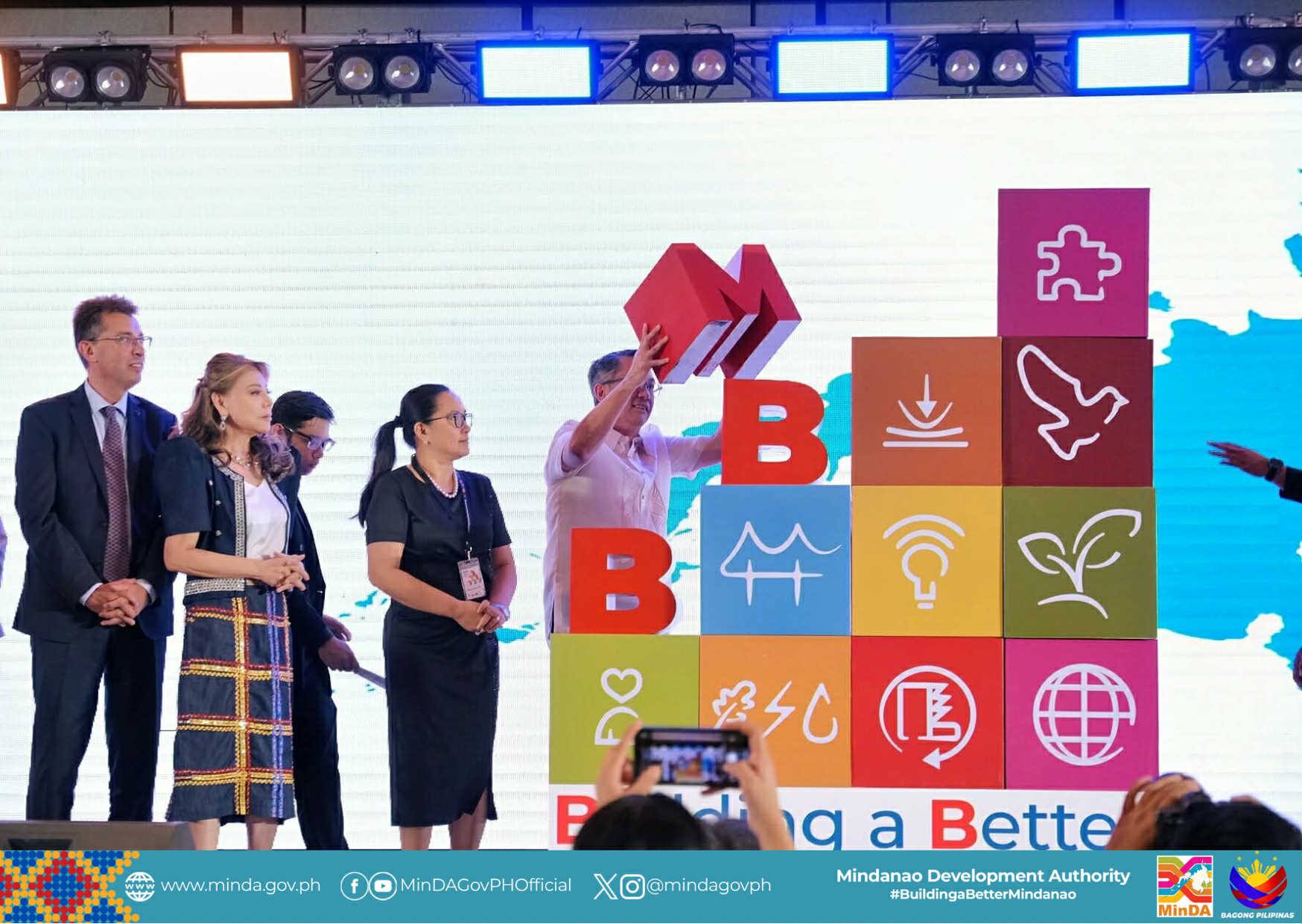
Neither is there room to extensively discuss regional or local government (P)BBM initiatives, some of which will nevertheless be listed here. The Office of the Presidential Assistant for the Visayas calls its outreach program Bayan Bangon Muli. The Mindanao Development Authority has named its recently launched comprehensive development program as Building a Better Mindanao. The Department of Education in Eastern Visayas partnered with the Bureau of Fire Protection for a fire safety campaign called Batang Bumberong Mag-aaral. The Technical Education and Skills
Development Authority in the Zamboanga Peninsula (Region 9) has (or had) an initiative called Paglingap sa Buhay ng Bawat Mamamayan Community Assistance for Responsible Employers to Serve, or PBBM CARES. Region 9 is also the pilot site of the Department of Education’s Bawat Bata Makababasa Program.
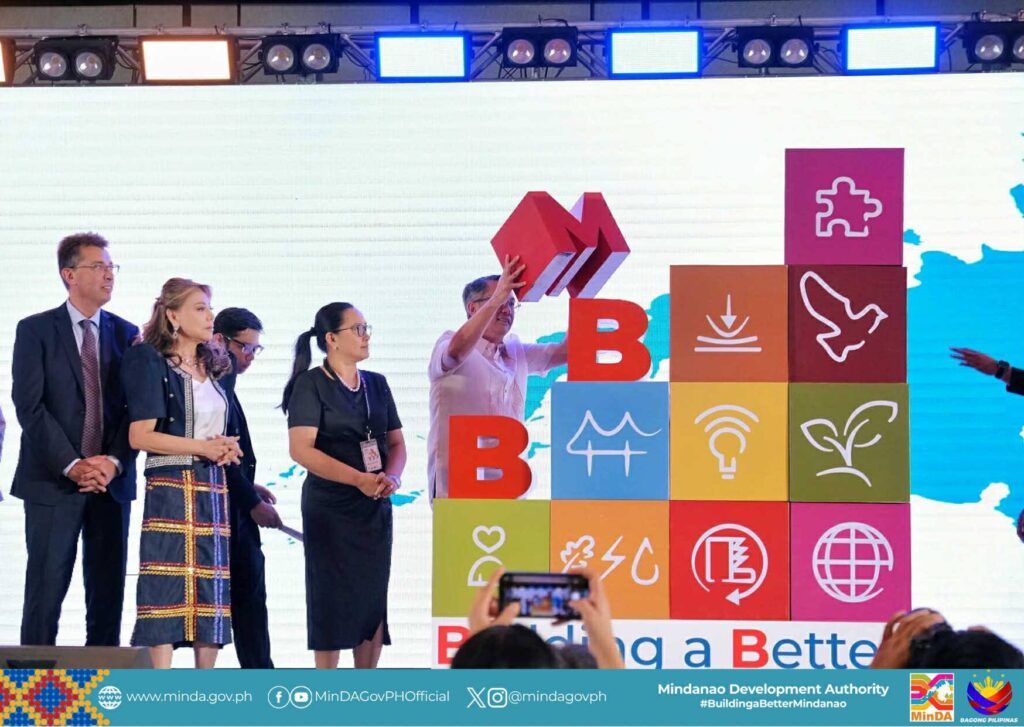
One product of the Bongbong administration’s housing program is the Bocaue Bulacan Manor housing project. Still not content with all of the national-level BBM rice programs, the Provincial Government of Misamis Occidental dubbed its local low-cost rice program Baratong Bugas para sa Misamisnon. The provincial government of Ilocos Norte has a Sustainable Agroforestry Farm Enterprise-Bamboo Business Model—SAFE-BBM—program. The MIMAROPA Police Regional Office branded a community engagement program as Biyayang Bigay ni Marcos sa mga Kapatid na Mangyan. Lastly, the Quirino Police Provincial Office gave a free haircutting service the name Barbero ng Bayan si Mamang at Manang Pulis.
It is difficult to imagine the cost—certainly not inconsiderable—in producing publicity materials and other collaterals for all of the abovementioned. Removing and replacing all the BBMs across the bureaucracy and local governments will probably be very expensive as well. So, some “do nothing” advocates might think, let us eat BBM rice, live in a BBM housing unit, buy medicine at a Botika at Bakuna para sa Mamamayan outlet, and get a BBM haircut.
To be a bit fair, naming projects after the current tenant of Malacañang has been a tradition long before Bongbong became president. Considering rice-related programs in the post-EDSA revolt era alone, during the Fidel V. Ramos presidency, the Juan Flavier-headed Department of Health had a rice fortification program that produced FVRice (Fortified Vitamin Rice). Under Joseph “Erap” Estrada, the National Food Authority aimed to sell low-cost rice through Enhanced Retail Access for the Poor stores. The multi-agency rice program under Gloria Macapagal Arroyo was called Ginintuang Masaganang Ani. Arguably, under Noynoy, even with his anti-epal directives, projects during his tenure with “Pinoy” in their names recalled his preferred presidential appellation, PNoy; under Aquino III, the Department of Agriculture had what was called DA-Agri Pinoy Projects. Lastly, while limited to the Palawan local government, under President Rodrigo Roa Duterte (PRRD), there was a Productivity Rice Reform Development project.
But as with many things Marcos—from plunder to Imelda’s shoe collection to the construction of markers and memorials glorifying them—what distinguishes the Bongbong-era presidential “epalisms” from those of preceding administrations is scale: overall, there seems to be a collective effort by state apparatuses to ensure that BBM is everything, everywhere, all at once.
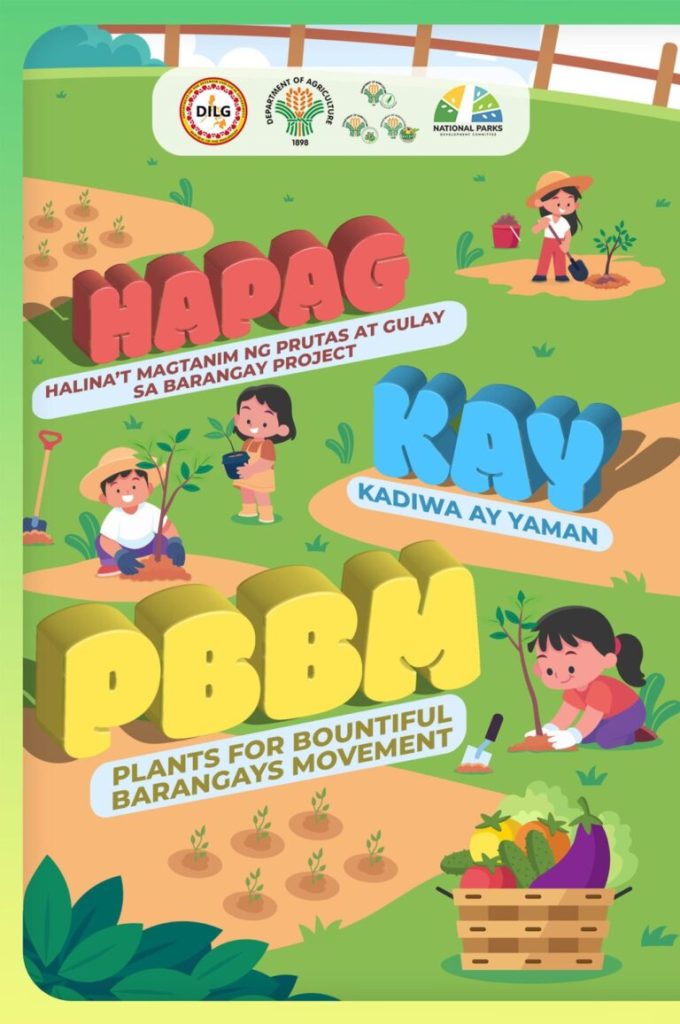
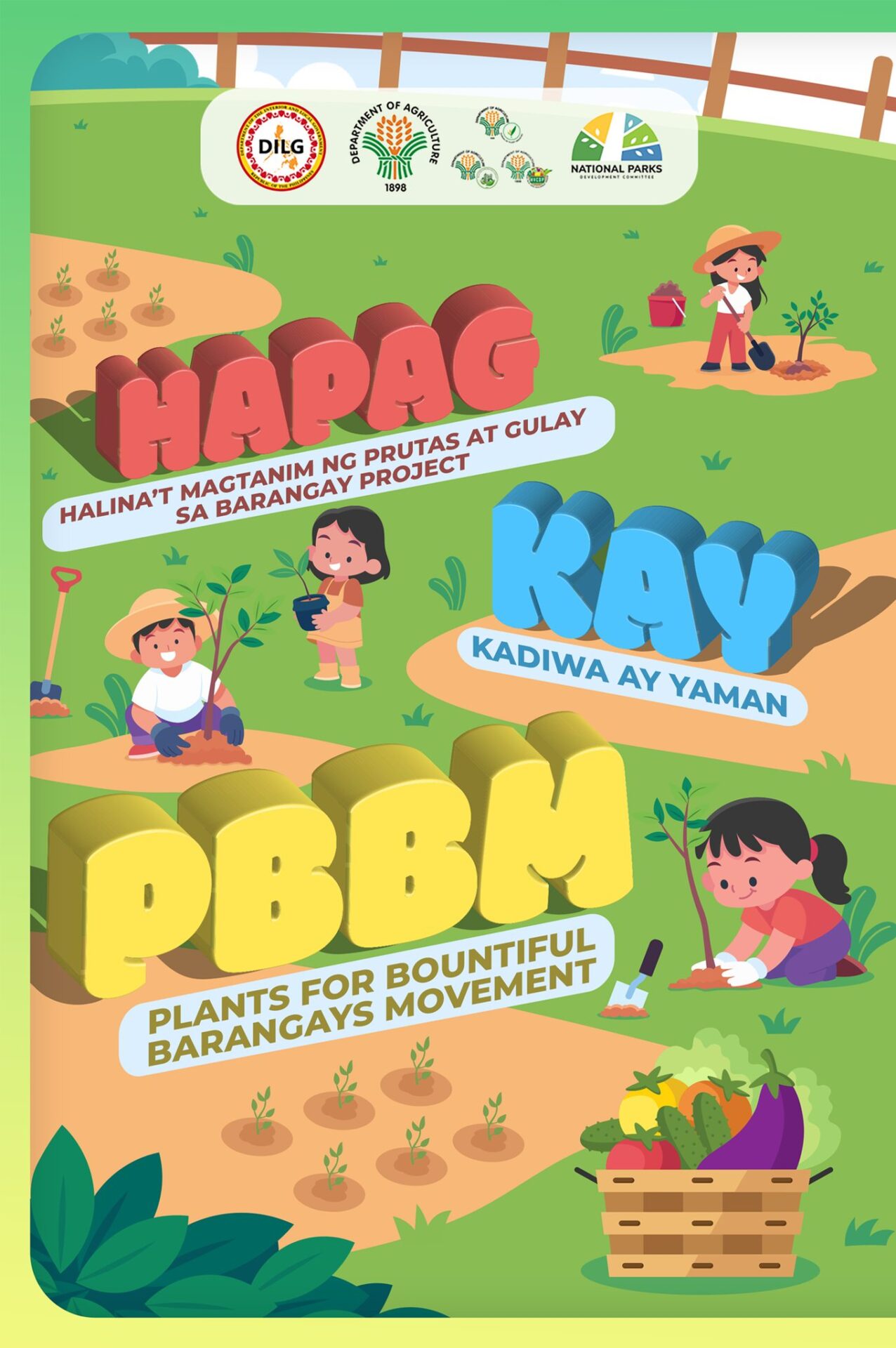
While it is unlikely that Bongbong has explicitly ordered his underlings (and their underlings) to come up with (P)BBM programs, he certainly is not discouraging them from naming things after him. At March 2023 launch of perhaps the most tortuous (read: “pilit”) PBBM naming instance—the Department of Agriculture and the Department of Interior and Local Government’s sustainable urban agriculture program, Halina’t Magtanim ng Prutas at Gulay Kadiwa’y Yaman Plants for Bountiful Barangays Movement, which somehow can be abbreviated as HAPAG KAY BBM (in English, literally, a table setting for BBM, not by BBM)—Bongbong said, unironically, that “the witty abbreviation for easy name recall is also noteworthy, as it signifies this administration’s sincerity and resolve to address the issues of food prices and food supply.” Earlier this year, his son, House Majority Leader Sandro Marcos, delivered remarks on behalf of his father during the launch of a new Commission on Higher Education scholarship program called Programa para sa Buti ng Bayan at Mamamayan: Galing, Akses, Batid at Angat Tungo sa Yaman ng Bayan, or PBBM GABAY ng Bayan, stating the name of the program several times.
Another presidency, another “anti-epal” order, this time in the form of DILG Memorandum Circular no. 2026-006, released on Jan. 29 this year. The MC “[reiterates and institutionalizes] the policy prohibiting the display and/or affixture of the name, image, or likeness of public officials on government-funded projects, programs, activities, and properties, in order to promote professionalism in public service, and uphold the principle that government undertakings are funded by public resources and not by individual officials.”
The directive cites the legal bases for it, including this year’s General Appropriations Act, which “prohibits the display and/or affixture of the name, image and likeness of public officials on government projects and the display and/or affixture of the name, picture, image, motto, logo, color motif, initials, or other symbol or graphic representation associated with any public official,” specifically “on signboards for all programs, activities, and projects funded under said Act.”
Reportedly, President Ferdinand Marcos Jr.—Bongbong, BBM, PBBM himself—ordered the fast-tracking of the DILG MC (more than midway into his term).
The current administration’s orders echo DILG MC 2010-101—“Banning Names or Initials and/or Images or Pictures of Government Officials in Billboards and Signages of Government Programs, Projects and Properties”—issued nearly sixteen years ago by former DILG secretary Jesse Robredo. No statutes or earlier circulars are cited in that 2010 order; Robredo partly anchored his issuance on “[President Benigno “Noynoy” Aquino III’s directive to] all members of the Cabinet and other government instrumentalities to refrain from associating the President’s personality and identity in their programs and projects.”
Today’s anti-epal issuances do not contain such a clear injunction to disassociate public projects from the president—the DILG MC is only addressed to “all provincial, city, municipal, barangay elected and appointed officials; DILG Central Office, regional and field office personnel; and officials and employees of DILG attached agencies.” If the slew of “BBM” and “PBBM” programs and projects since Marcos Jr. became president are any indication, Bongbong may not have an affinity for such anti-self-aggrandizing orders that apply to him, or perhaps anyone in his cabinet that he may designate as his preferred successor.
“Build Better More” and More
Perhaps the best known BBM program is Build Better More, the administration’s infrastructure program, which superseded the Duterte-era “Build! Build! Build!” (which reportedly did not result in a lot of actual building). Key agencies involved in the program include the Department of Public Works and Highways and the Department of Economy, Planning, and Development and one of its attached agencies, the Public-Private Partnership Center of the Philippines (PPPs being more crucial to BBM [the program] than Duterte’s BBB). A 2025 Bangko Sentral ng Pilipinas brochure notes that there are over 200 infrastructure flagship projects under the BBM program; how many will be completed—or at least initiated—before BBM’s term concludes remains to be seen. Former Senate Minority Floor Leader Koko Pimentel mocked the BBM moniker back when it was unveiled in 2022, stating that “BBM” could very well be replaced with “FM”—still the president’s initials—standing for “Finish More.”
Not to be outdone, also early on in Bongbong’s term, the Department of Tourism and the Department of Migrant Workers launched a program called Bisita Be My Guest (BBMG, but also abbreviated as BBM Guest). It was an incentive/rewards program largely for migrant workers and other overseas Filipinos to serve as tourism ambassadors. It is unclear if the program was effective; reportedly, there was a 2.16 percent drop in tourist arrivals in the country in 2025. As of this writing, the BBMG website is not live; side-by-side messages of support uploaded there from both Bongbong and Vice President Sara Duterte do call to mind the halcyon days of the BBM-Sara Uniteam. A large portrait (bigger than an ID-sized one) of tourism secretary Christina Garcia Frasco could be found on the old website; BBM Guest was launched a few years before Frasco ordered the removal of her visage from tourism materials across the country, having been called out for appearing in (at times dominating) not an insignificant amount of them.
Among the “PBBM” endeavors, the most headline-making seems to be the Pasig Bigyang Buhay Muli project. According to the project’s website, this PBBM came about when “Our beloved leader, His Excellency President Ferdinand R. Marcos Jr., together with our First Lady Marie Louise Araneta-Marcos, promptly ordered the creation of a comprehensive and extensive rehabilitation program for the Pasig River.” At the project’s launch in 2024, the Mandaluyong-born Marcos declared himself “Anak ng Pasig” (child of the Pasig)—perhaps his way of justifying the name of the river rehabilitation project. (Interestingly, his website insists that he was born in Batac, Ilocos Norte.) Reportage on the first lady’s recent ceremonial turnover of kiosks at the Pasig River Esplanade—itself a product of the current rehab program—affirms that the PBBM label remains in use for the patently beloved Bongbong Marcos’s river revival efforts.
Exactly how many BBM/PBBM projects exist or existed? Besides the abovementioned, at the national level, there’s BroadBand ng Masa, the free public wi-fi program of the Department of Information and Communications Technology. In 2024, the Department of Social Welfare and Development launched the Buong Bansa Mapayapa program, the name they gave to their current “peace and development framework.”
The National Housing Authority’s housing program has also been referred to as the Build Better and More program, not to be (but certainly has been) confused with the broader BBM infrastructure marquee. The Food and Drug Administration has a program that “aims to assist and capacitate local entrepreneurs particularly the micro, small, and medium enterprises” called Bigyang-halaga, Bangon MSMEs (which is usually rendered BBMSMEs, but sometimes rendered as BBM MSMEs—what the extra “M” stands for is a mystery).
From 2022 until around August 2025, the Department of Budget and Management has been pushing for the passage of the Progressive Budgeting for Better and Modernized Governance bill. Nowadays, DBM is advocating the enactment of a Philippine Budgeting Code, “formerly known” as the PBBM Governance proposal. Perhaps the renaming will finally lead to the bill’s enactment. The short title of the most recent Senate proposal, filed by Senator Jinggoy Estrada, is “the Philippine Budgeting Act.”
Running count thus far: seven national-level programs (one international, in a sense), and one executive-backed legislative proposal that has since been renamed. But wait, there’s more.
Bigas, Bridges, Medical Aid
Still at the national level, the Department of Agriculture refers to the (very partial) fulfillment of the president’s campaign promise to bring down the price of rice to PHP 20 per kilo as the “Benteng Bigas, Meron Na!” program. Then there’s the registry system to access the low-cost rice: P20 Benteng Bigas Masterlist (PBBM) Registry System. In English, the “PBB” section is “twenty-peso twenty-peso rice”—an instance of dumb redundancy for the sake of recall.

The DA’s BBM rice program is distinct from that of the National Irrigation Authority—the latter’s BBM stands for “Bagong Bayaning Magsasaka,” a farmer assistance program that draws from (or is simply a nickname of) NIA’s Farming Support Services program. (A support program for West Philippine Sea fisherfolk under the DA’s Bureau of Fisheries and Aquatic Resources has a similar-sounding name: Kadiwa ng Bagong Bayaning Mangingisda, or KBBM.) All of the preceding are distinct from an unrealized proposal called Programang Benteng Bigas sa Mamamayan, publicized in June 2022, from the Duterte-era leadership of the Department of the Agrarian Reform, which entailed the consolidation of small farms into “mega farms” to fulfill the low-cost rice promise.
All of the above are also different from the current name of DSWD’s AKAP Rice subsidy program—Bigas para sa Bayan na Mura. That’s four distinct agencies (NIA was “returned” to the Office of the President in 2024, after briefly being placed under the Department of Agriculture by President Duterte in April 2022) that want to brand bigas na mura as BBM.
A February 4 Manila Bulletin report noted that “regular milled rice averaged ₱40.65 per kilo, well-milled rice ₱46.30 per kilo, and premium rice ₱54.51 per kilo.”
While the Department of Agrarian Reform’s 2022 PBBM proposal was not implemented, there is an existing PBBM-branded major DAR initiative: the Pang-Agraryong Tulay Para sa Bagong Bayanihan ng mga Magsasaka Bridges (PBBM Bridges, if one disregards the “T” from “Tulay”) project. The project made headlines—local and overseas—in September last year when it was reported that the president of South Korea cancelled proceedings toward the approval of a loan for PBBM Bridges, given our globally renowned flood control mess; the original Korean news article helpfully pointed out to readers that the program was named after Marcos.
In response to the loan discontinuation news, in September last year, the Department of Finance made a face-saving claim that funding for the bridges was actually set to come from France, not Korea. Earlier this year, according to a BusinessMirror article, DEPDev’s Economy and Development Council “approved the P28.24-billion [PBBM Bridges] project,” which “involves the construction of better and well-designed durable, permanent modular steel bridges to link [agrarian reform communities] with growth centers and key value chain nodes.” Wherever the BBM administration gets the money for it, if the project does actually achieve its aims, there may soon be dozens of bridges with “PBBM” plastered on them in various agricultural areas across the country.
Still on BBM national newsmakers, after picking up from a declaration made by Bongbong in his 2025 State-of-the-Nation address—“wala nang kailangan bayaran ang pasyente basta sa DOH hospital dahil bayad na po ang bill ninyo”—last year, the Department of Health started calling its zero billing policy the Bayad na Bill Mo program. BBM himself went around hospitals to check on the implementation of BBM.
A recap: over a dozen programs and projects mentioned here so far involving about as many distinct national government agencies. Cabinet meetings must at times be so confusing.
(P)BBM All the Way Down
So far, the programs and projects mentioned are national in scope. (If one wants to go outside of the bounds of our national territory, besides BBM Guest, the Land Transportation Office and the Department of Migrant Workers calls a Philippine driver’s license renewal program for Overseas Filipino Workers “Pinabilis sa Bagong Bayani ang Magkalisensya,” or the LTO PBBM Project.) For the sake of brevity, some, like the Office of the Presidential Adviser for Poverty Alleviation’s Batang Busog Malusog program and the Government Service Insurance System’s Pabahay sa Bagong Bayani na Manggagawa sa Pamahalaan, will not be detailed here.
Neither is there room to extensively discuss regional or local government (P)BBM initiatives, some of which will nevertheless be listed here. The Office of the Presidential Assistant for the Visayas calls its outreach program Bayan Bangon Muli. The Mindanao Development Authority has named its recently launched comprehensive development program as Building a Better Mindanao. The Department of Education in Eastern Visayas partnered with the Bureau of Fire Protection for a fire safety campaign called Batang Bumberong Mag-aaral. The Technical Education and Skills
Development Authority in the Zamboanga Peninsula (Region 9) has (or had) an initiative called Paglingap sa Buhay ng Bawat Mamamayan Community Assistance for Responsible Employers to Serve, or PBBM CARES. Region 9 is also the pilot site of the Department of Education’s Bawat Bata Makababasa Program.
One product of the Bongbong administration’s housing program is the Bocaue Bulacan Manor housing project. Still not content with all of the national-level BBM rice programs, the Provincial Government of Misamis Occidental dubbed its local low-cost rice program Baratong Bugas para sa Misamisnon. The provincial government of Ilocos Norte has a Sustainable Agroforestry Farm Enterprise-Bamboo Business Model—SAFE-BBM—program. The MIMAROPA Police Regional Office branded a community engagement program as Biyayang Bigay ni Marcos sa mga Kapatid na Mangyan. Lastly, the Quirino Police Provincial Office gave a free haircutting service the name Barbero ng Bayan si Mamang at Manang Pulis.
It is difficult to imagine the cost—certainly not inconsiderable—in producing publicity materials and other collaterals for all of the abovementioned. Removing and replacing all the BBMs across the bureaucracy and local governments will probably be very expensive as well. So, some “do nothing” advocates might think, let us eat BBM rice, live in a BBM housing unit, buy medicine at a Botika at Bakuna para sa Mamamayan outlet, and get a BBM haircut.
To be a bit fair, naming projects after the current tenant of Malacañang has been a tradition long before Bongbong became president. Considering rice-related programs in the post-EDSA revolt era alone, during the Fidel V. Ramos presidency, the Juan Flavier-headed Department of Health had a rice fortification program that produced FVRice (Fortified Vitamin Rice). Under Joseph “Erap” Estrada, the National Food Authority aimed to sell low-cost rice through Enhanced Retail Access for the Poor stores. The multi-agency rice program under Gloria Macapagal Arroyo was called Ginintuang Masaganang Ani. Arguably, under Noynoy, even with his anti-epal directives, projects during his tenure with “Pinoy” in their names recalled his preferred presidential appellation, PNoy; under Aquino III, the Department of Agriculture had what was called DA-Agri Pinoy Projects. Lastly, while limited to the Palawan local government, under President Rodrigo Roa Duterte (PRRD), there was a Productivity Rice Reform Development project.
But as with many things Marcos—from plunder to Imelda’s shoe collection to the construction of markers and memorials glorifying them—what distinguishes the Bongbong-era presidential “epalisms” from those of preceding administrations is scale: overall, there seems to be a collective effort by state apparatuses to ensure that BBM is everything, everywhere, all at once.
While it is unlikely that Bongbong has explicitly ordered his underlings (and their underlings) to come up with (P)BBM programs, he certainly is not discouraging them from naming things after him. At March 2023 launch of perhaps the most tortuous (read: “pilit”) PBBM naming instance—the Department of Agriculture and the Department of Interior and Local Government’s sustainable urban agriculture program, Halina’t Magtanim ng Prutas at Gulay Kadiwa’y Yaman Plants for Bountiful Barangays Movement, which somehow can be abbreviated as HAPAG KAY BBM (in English, literally, a table setting for BBM, not by BBM)—Bongbong said, unironically, that “the witty abbreviation for easy name recall is also noteworthy, as it signifies this administration’s sincerity and resolve to address the issues of food prices and food supply.” Earlier this year, his son, House Majority Leader Sandro Marcos, delivered remarks on behalf of his father during the launch of a new Commission on Higher Education scholarship program called Programa para sa Buti ng Bayan at Mamamayan: Galing, Akses, Batid at Angat Tungo sa Yaman ng Bayan, or PBBM GABAY ng Bayan, stating the name of the program several times.
(Final count of projects and programs named after Bongbong in this article: thirty, certainly a fraction of realized (P)BBM government endeavors. And that group excludes those that use the MARCOS acronym instead, such as CHED-Cordillera’s Maximizing Agricultural Resources for Community Sustainability. The count also excludes themes of government celebrations, such as “From Red Tape to Red Carpet: Better Business Movement in Bagong Pilipinas,” the theme chosen by the Anti-Red Tape Authority for Ease of Doing Business Month in 2025, or that instance when a 2023 ceremony to commemorate progress on the bridge across the Manila Bay was called the Bataan-Cavite Interlink Bridge Milestone (BBM) Ceremony.)
If a proposal such as Sen, Loren Legarda’s Senate Bill no. 1716, filed on January 28, 2026 does become law a few months before Bongbong’s term ends, Bongbong may become personally liable for failing to remove the BBMs that he “ordered, approved, authorized, knowingly allowed, or failed to prevent the prohibited display [of].”
Would Bongbong voluntarily sweep away all of the BBMs without such a law (that he has to explicitly or tacitly approve)?
Bongbong first started using BBM to refer to himself during his failed 2016 vice presidential campaign, though some of his ads back then still played around with the “bongs” in his nickname. The vlog series he and his public relations people started back in 2018 is called BBM Vlogs. Querying “BBM” in the database of Security and Exchange Commission-registered entities via their SEC Express website, one will come across BBM groups likely organized to support Marcos’s presidential run, at least one registering in 2020, well before he announced his candidacy. In short, Bongbong was BBM, BBM was Bongbong as a result of campaign branding which, since his senate run in 2009-2010, de-emphasized his connections to his infamous father and the Marcos dictatorship (see Amado Mendoza and Gerardo Eusebio’s contributions to a 2013 public forum). Reportedly, Bongbong at least looked into foreign assistance to help rebrand his notorious family in toto.
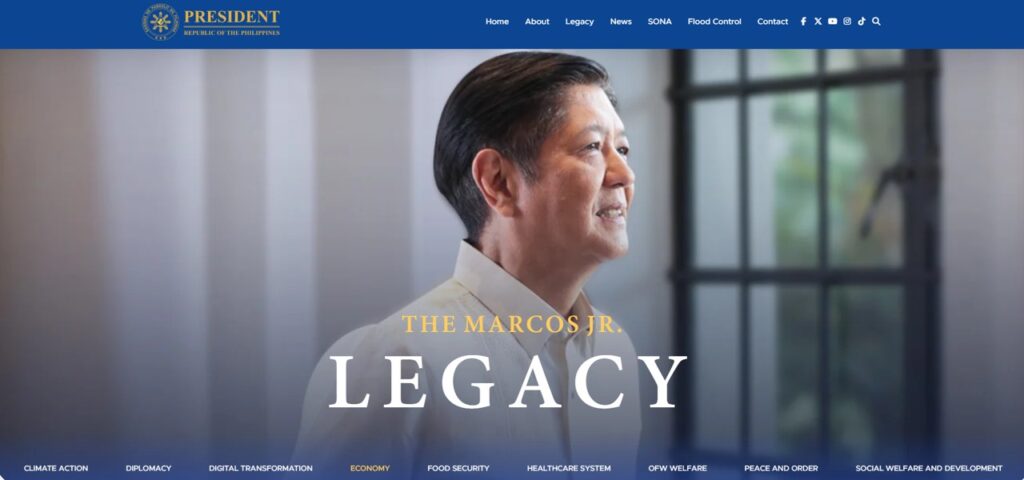
Another presidency, another “anti-epal” order, this time in the form of DILG Memorandum Circular no. 2026-006, released on Jan. 29 this year. The MC “[reiterates and institutionalizes] the policy prohibiting the display and/or affixture of the name, image, or likeness of public officials on government-funded projects, programs, activities, and properties, in order to promote professionalism in public service, and uphold the principle that government undertakings are funded by public resources and not by individual officials.”
The directive cites the legal bases for it, including this year’s General Appropriations Act, which “prohibits the display and/or affixture of the name, image and likeness of public officials on government projects and the display and/or affixture of the name, picture, image, motto, logo, color motif, initials, or other symbol or graphic representation associated with any public official,” specifically “on signboards for all programs, activities, and projects funded under said Act.”
Reportedly, President Ferdinand Marcos Jr.—Bongbong, BBM, PBBM himself—ordered the fast-tracking of the DILG MC (more than midway into his term).
The current administration’s orders echo DILG MC 2010-101—“Banning Names or Initials and/or Images or Pictures of Government Officials in Billboards and Signages of Government Programs, Projects and Properties”—issued nearly sixteen years ago by former DILG secretary Jesse Robredo. No statutes or earlier circulars are cited in that 2010 order; Robredo partly anchored his issuance on “[President Benigno “Noynoy” Aquino III’s directive to] all members of the Cabinet and other government instrumentalities to refrain from associating the President’s personality and identity in their programs and projects.”
Today’s anti-epal issuances do not contain such a clear injunction to disassociate public projects from the president—the DILG MC is only addressed to “all provincial, city, municipal, barangay elected and appointed officials; DILG Central Office, regional and field office personnel; and officials and employees of DILG attached agencies.” If the slew of “BBM” and “PBBM” programs and projects since Marcos Jr. became president are any indication, Bongbong may not have an affinity for such anti-self-aggrandizing orders that apply to him, or perhaps anyone in his cabinet that he may designate as his preferred successor.
“Build Better More” and More
Perhaps the best known BBM program is Build Better More, the administration’s infrastructure program, which superseded the Duterte-era “Build! Build! Build!” (which reportedly did not result in a lot of actual building). Key agencies involved in the program include the Department of Public Works and Highways and the Department of Economy, Planning, and Development and one of its attached agencies, the Public-Private Partnership Center of the Philippines (PPPs being more crucial to BBM [the program] than Duterte’s BBB). A 2025 Bangko Sentral ng Pilipinas brochure notes that there are over 200 infrastructure flagship projects under the BBM program; how many will be completed—or at least initiated—before BBM’s term concludes remains to be seen. Former Senate Minority Floor Leader Koko Pimentel mocked the BBM moniker back when it was unveiled in 2022, stating that “BBM” could very well be replaced with “FM”—still the president’s initials—standing for “Finish More.”
Not to be outdone, also early on in Bongbong’s term, the Department of Tourism and the Department of Migrant Workers launched a program called Bisita Be My Guest (BBMG, but also abbreviated as BBM Guest). It was an incentive/rewards program largely for migrant workers and other overseas Filipinos to serve as tourism ambassadors. It is unclear if the program was effective; reportedly, there was a 2.16 percent drop in tourist arrivals in the country in 2025. As of this writing, the BBMG website is not live; side-by-side messages of support uploaded there from both Bongbong and Vice President Sara Duterte do call to mind the halcyon days of the BBM-Sara Uniteam. A large portrait (bigger than an ID-sized one) of tourism secretary Christina Garcia Frasco could be found on the old website; BBM Guest was launched a few years before Frasco ordered the removal of her visage from tourism materials across the country, having been called out for appearing in (at times dominating) not an insignificant amount of them.
Among the “PBBM” endeavors, the most headline-making seems to be the Pasig Bigyang Buhay Muli project. According to the project’s website, this PBBM came about when “Our beloved leader, His Excellency President Ferdinand R. Marcos Jr., together with our First Lady Marie Louise Araneta-Marcos, promptly ordered the creation of a comprehensive and extensive rehabilitation program for the Pasig River.” At the project’s launch in 2024, the Mandaluyong-born Marcos declared himself “Anak ng Pasig” (child of the Pasig)—perhaps his way of justifying the name of the river rehabilitation project. (Interestingly, his website insists that he was born in Batac, Ilocos Norte.) Reportage on the first lady’s recent ceremonial turnover of kiosks at the Pasig River Esplanade—itself a product of the current rehab program—affirms that the PBBM label remains in use for the patently beloved Bongbong Marcos’s river revival efforts.
Exactly how many BBM/PBBM projects exist or existed? Besides the abovementioned, at the national level, there’s BroadBand ng Masa, the free public wi-fi program of the Department of Information and Communications Technology. In 2024, the Department of Social Welfare and Development launched the Buong Bansa Mapayapa program, the name they gave to their current “peace and development framework.”
The National Housing Authority’s housing program has also been referred to as the Build Better and More program, not to be (but certainly has been) confused with the broader BBM infrastructure marquee. The Food and Drug Administration has a program that “aims to assist and capacitate local entrepreneurs particularly the micro, small, and medium enterprises” called Bigyang-halaga, Bangon MSMEs (which is usually rendered BBMSMEs, but sometimes rendered as BBM MSMEs—what the extra “M” stands for is a mystery).
From 2022 until around August 2025, the Department of Budget and Management has been pushing for the passage of the Progressive Budgeting for Better and Modernized Governance bill. Nowadays, DBM is advocating the enactment of a Philippine Budgeting Code, “formerly known” as the PBBM Governance proposal. Perhaps the renaming will finally lead to the bill’s enactment. The short title of the most recent Senate proposal, filed by Senator Jinggoy Estrada, is “the Philippine Budgeting Act.”
Running count thus far: seven national-level programs (one international, in a sense), and one executive-backed legislative proposal that has since been renamed. But wait, there’s more.
Bigas, Bridges, Medical Aid
Still at the national level, the Department of Agriculture refers to the (very partial) fulfillment of the president’s campaign promise to bring down the price of rice to PHP 20 per kilo as the “Benteng Bigas, Meron Na!” program. Then there’s the registry system to access the low-cost rice: P20 Benteng Bigas Masterlist (PBBM) Registry System. In English, the “PBB” section is “twenty-peso twenty-peso rice”—an instance of dumb redundancy for the sake of recall.
The DA’s BBM rice program is distinct from that of the National Irrigation Authority—the latter’s BBM stands for “Bagong Bayaning Magsasaka,” a farmer assistance program that draws from (or is simply a nickname of) NIA’s Farming Support Services program. (A support program for West Philippine Sea fisherfolk under the DA’s Bureau of Fisheries and Aquatic Resources has a similar-sounding name: Kadiwa ng Bagong Bayaning Mangingisda, or KBBM.) All of the preceding are distinct from an unrealized proposal called Programang Benteng Bigas sa Mamamayan, publicized in June 2022, from the Duterte-era leadership of the Department of the Agrarian Reform, which entailed the consolidation of small farms into “mega farms” to fulfill the low-cost rice promise.
All of the above are also different from the current name of DSWD’s AKAP Rice subsidy program—Bigas para sa Bayan na Mura. That’s four distinct agencies (NIA was “returned” to the Office of the President in 2024, after briefly being placed under the Department of Agriculture by President Duterte in April 2022) that want to brand bigas na mura as BBM.
A February 4 Manila Bulletin report noted that “regular milled rice averaged ₱40.65 per kilo, well-milled rice ₱46.30 per kilo, and premium rice ₱54.51 per kilo.”
While the Department of Agrarian Reform’s 2022 PBBM proposal was not implemented, there is an existing PBBM-branded major DAR initiative: the Pang-Agraryong Tulay Para sa Bagong Bayanihan ng mga Magsasaka Bridges (PBBM Bridges, if one disregards the “T” from “Tulay”) project. The project made headlines—local and overseas—in September last year when it was reported that the president of South Korea cancelled proceedings toward the approval of a loan for PBBM Bridges, given our globally renowned flood control mess; the original Korean news article helpfully pointed out to readers that the program was named after Marcos.
In response to the loan discontinuation news, in September last year, the Department of Finance made a face-saving claim that funding for the bridges was actually set to come from France, not Korea. Earlier this year, according to a BusinessMirror article, DEPDev’s Economy and Development Council “approved the P28.24-billion [PBBM Bridges] project,” which “involves the construction of better and well-designed durable, permanent modular steel bridges to link [agrarian reform communities] with growth centers and key value chain nodes.” Wherever the BBM administration gets the money for it, if the project does actually achieve its aims, there may soon be dozens of bridges with “PBBM” plastered on them in various agricultural areas across the country.
Still on BBM national newsmakers, after picking up from a declaration made by Bongbong in his 2025 State-of-the-Nation address—“wala nang kailangan bayaran ang pasyente basta sa DOH hospital dahil bayad na po ang bill ninyo”—last year, the Department of Health started calling its zero billing policy the Bayad na Bill Mo program. BBM himself went around hospitals to check on the implementation of BBM.
A recap: over a dozen programs and projects mentioned here so far involving about as many distinct national government agencies. Cabinet meetings must at times be so confusing.
(P)BBM All the Way Down
So far, the programs and projects mentioned are national in scope. (If one wants to go outside of the bounds of our national territory, besides BBM Guest, the Land Transportation Office and the Department of Migrant Workers calls a Philippine driver’s license renewal program for Overseas Filipino Workers “Pinabilis sa Bagong Bayani ang Magkalisensya,” or the LTO PBBM Project.) For the sake of brevity, some, like the Office of the Presidential Adviser for Poverty Alleviation’s Batang Busog Malusog program and the Government Service Insurance System’s Pabahay sa Bagong Bayani na Manggagawa sa Pamahalaan, will not be detailed here.
Neither is there room to extensively discuss regional or local government (P)BBM initiatives, some of which will nevertheless be listed here. The Office of the Presidential Assistant for the Visayas calls its outreach program Bayan Bangon Muli. The Mindanao Development Authority has named its recently launched comprehensive development program as Building a Better Mindanao. The Department of Education in Eastern Visayas partnered with the Bureau of Fire Protection for a fire safety campaign called Batang Bumberong Mag-aaral. The Technical Education and Skills
Development Authority in the Zamboanga Peninsula (Region 9) has (or had) an initiative called Paglingap sa Buhay ng Bawat Mamamayan Community Assistance for Responsible Employers to Serve, or PBBM CARES. Region 9 is also the pilot site of the Department of Education’s Bawat Bata Makababasa Program.
One product of the Bongbong administration’s housing program is the Bocaue Bulacan Manor housing project. Still not content with all of the national-level BBM rice programs, the Provincial Government of Misamis Occidental dubbed its local low-cost rice program Baratong Bugas para sa Misamisnon. The provincial government of Ilocos Norte has a Sustainable Agroforestry Farm Enterprise-Bamboo Business Model—SAFE-BBM—program. The MIMAROPA Police Regional Office branded a community engagement program as Biyayang Bigay ni Marcos sa mga Kapatid na Mangyan. Lastly, the Quirino Police Provincial Office gave a free haircutting service the name Barbero ng Bayan si Mamang at Manang Pulis.
It is difficult to imagine the cost—certainly not inconsiderable—in producing publicity materials and other collaterals for all of the abovementioned. Removing and replacing all the BBMs across the bureaucracy and local governments will probably be very expensive as well. So, some “do nothing” advocates might think, let us eat BBM rice, live in a BBM housing unit, buy medicine at a Botika at Bakuna para sa Mamamayan outlet, and get a BBM haircut.
To be a bit fair, naming projects after the current tenant of Malacañang has been a tradition long before Bongbong became president. Considering rice-related programs in the post-EDSA revolt era alone, during the Fidel V. Ramos presidency, the Juan Flavier-headed Department of Health had a rice fortification program that produced FVRice (Fortified Vitamin Rice). Under Joseph “Erap” Estrada, the National Food Authority aimed to sell low-cost rice through Enhanced Retail Access for the Poor stores. The multi-agency rice program under Gloria Macapagal Arroyo was called Ginintuang Masaganang Ani. Arguably, under Noynoy, even with his anti-epal directives, projects during his tenure with “Pinoy” in their names recalled his preferred presidential appellation, PNoy; under Aquino III, the Department of Agriculture had what was called DA-Agri Pinoy Projects. Lastly, while limited to the Palawan local government, under President Rodrigo Roa Duterte (PRRD), there was a Productivity Rice Reform Development project.
But as with many things Marcos—from plunder to Imelda’s shoe collection to the construction of markers and memorials glorifying them—what distinguishes the Bongbong-era presidential “epalisms” from those of preceding administrations is scale: overall, there seems to be a collective effort by state apparatuses to ensure that BBM is everything, everywhere, all at once.
While it is unlikely that Bongbong has explicitly ordered his underlings (and their underlings) to come up with (P)BBM programs, he certainly is not discouraging them from naming things after him. At March 2023 launch of perhaps the most tortuous (read: “pilit”) PBBM naming instance—the Department of Agriculture and the Department of Interior and Local Government’s sustainable urban agriculture program, Halina’t Magtanim ng Prutas at Gulay Kadiwa’y Yaman Plants for Bountiful Barangays Movement, which somehow can be abbreviated as HAPAG KAY BBM (in English, literally, a table setting for BBM, not by BBM)—Bongbong said, unironically, that “the witty abbreviation for easy name recall is also noteworthy, as it signifies this administration’s sincerity and resolve to address the issues of food prices and food supply.” Earlier this year, his son, House Majority Leader Sandro Marcos, delivered remarks on behalf of his father during the launch of a new Commission on Higher Education scholarship program called Programa para sa Buti ng Bayan at Mamamayan: Galing, Akses, Batid at Angat Tungo sa Yaman ng Bayan, or PBBM GABAY ng Bayan, stating the name of the program several times.
(Final count of projects and programs named after Bongbong in this article: thirty, certainly a fraction of realized (P)BBM government endeavors. And that group excludes those that use the MARCOS acronym instead, such as CHED-Cordillera’s Maximizing Agricultural Resources for Community Sustainability. The count also excludes themes of government celebrations, such as “From Red Tape to Red Carpet: Better Business Movement in Bagong Pilipinas,” the theme chosen by the Anti-Red Tape Authority for Ease of Doing Business Month in 2025, or that instance when a 2023 ceremony to commemorate progress on the bridge across the Manila Bay was called the Bataan-Cavite Interlink Bridge Milestone (BBM) Ceremony.)
If a proposal such as Sen, Loren Legarda’s Senate Bill no. 1716, filed on January 28, 2026 does become law a few months before Bongbong’s term ends, Bongbong may become personally liable for failing to remove the BBMs that he “ordered, approved, authorized, knowingly allowed, or failed to prevent the prohibited display [of].”
Would Bongbong voluntarily sweep away all of the BBMs without such a law (that he has to explicitly or tacitly approve)?
Bongbong first started using BBM to refer to himself during his failed 2016 vice presidential campaign, though some of his ads back then still played around with the “bongs” in his nickname. The vlog series he and his public relations people started back in 2018 is called BBM Vlogs. Querying “BBM” in the database of Security and Exchange Commission-registered entities via their SEC Express website, one will come across BBM groups likely organized to support Marcos’s presidential run, at least one registering in 2020, well before he announced his candidacy. In short, Bongbong was BBM, BBM was Bongbong as a result of campaign branding which, since his senate run in 2009-2010, de-emphasized his connections to his infamous father and the Marcos dictatorship (see Amado Mendoza and Gerardo Eusebio’s contributions to a 2013 public forum). Reportedly, Bongbong at least looked into foreign assistance to help rebrand his notorious family in toto.
Observers have noted that using “BBM” allowed Bongbong to campaign without (always) saying that he is a Marcos, broadening his potential electoral base; such writers asked his critics to avoid using the admittedly catchy abbreviation. Some critics have at least tried to make fun of the brand, though arguably, such efforts still help to reinforce the Bongbong = BBM equivalence.
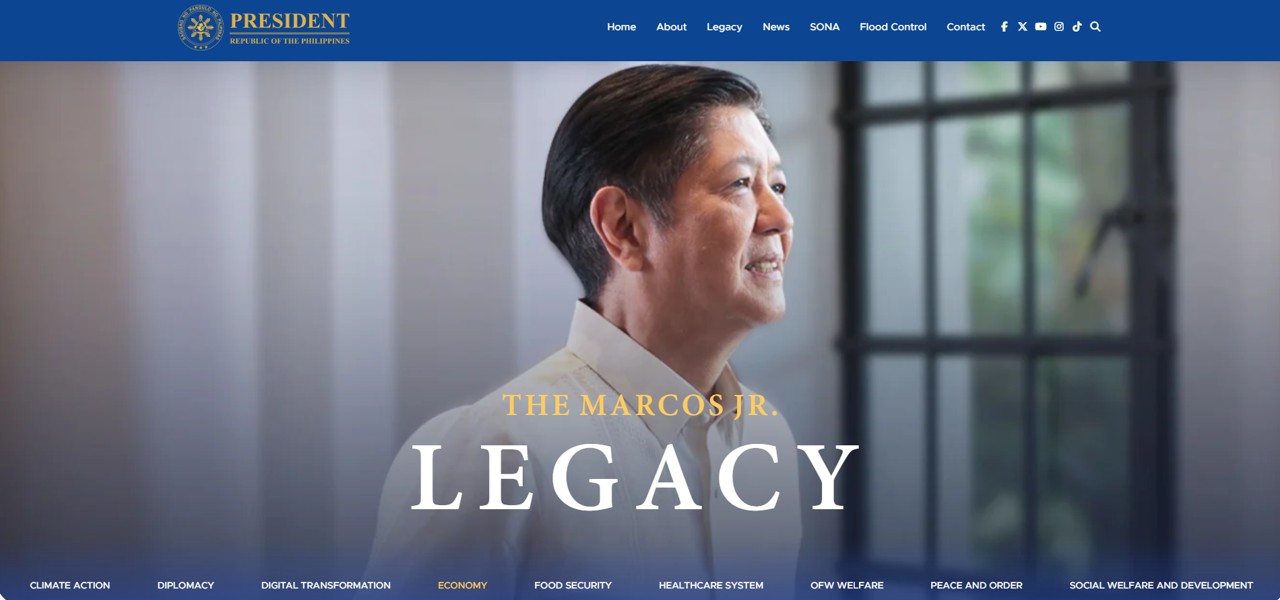
Perhaps encouraging (even implicitly) the use of BBM is a way for Bongbong to continue reaping the benefits of his branding investments, which must have cost a chunk of his plunder-derived wealth; after becoming president, the domain name of his website became pbbm.com.ph, replacing bongbongmarcos.com, which is curiously excluded from the Wayback Machine archiving service—as if to say that Bongbong is gone, only PBBM remains. A little over halfway into his term, the website already puts “the Marcos Legacy” front and center. Perhaps drowning us in BBMs is a way to make sure that we will remember him, with fondness or similar sentiments, when we say bye-bye Marcos (again, for the final time?) in 2028.